Video ad storytelling: why even a 15-second ad needs a story
Even a 15-second ad needs a story: it’s what keeps viewers watching and helps them remember the brand. Here’s the situation, conflict, solution structure, second-by-second outlines for 15- and 30-second ads, a worked example, common mistakes and a pre-publish checklist.

MoBenFreelance video creator
Contents
- Why a short ad needs a story
- The basic structure: situation, conflict, solution
- The hook: the first seconds decide everything
- 15-second ad script outline
- 30-second ad structure
- Worked example: a 15-second ad for an insulated bottle
- Mistakes that sink a short ad
- Pre-publish checklist for your ad
- Key takeaways
- FAQ
Yes, even a 15-second ad needs a story. Video ad storytelling doesn’t require a long script: a situation your audience recognizes, a conflict that creates tension and a solution that resolves it, with your brand at the center. That progression is what keeps people watching to the end and helps them remember who the ad was from.
In this guide: the situation, conflict, solution structure explained simply, second-by-second outlines for 15- and 30-second ads, a full worked example with a fictional product, the mistakes that sink short ads, a pre-publish checklist and an FAQ.
Why a short ad needs a story
A story gives a video direction. It tells viewers why they should watch, what’s happening and what they should remember.
Without a story, an ad often turns into a parade of images: a product, a pretty shot, a logo, some music, the end. It looks clean, but nothing holds attention or sticks in memory. With a mini-story, the video creates movement:
- a problem the viewer recognizes;
- an emotion: frustration, desire, curiosity;
- tension, the question “how does this end?”;
- a turning point or a discovery;
- a solution shown in action;
- a closing line or image that sticks.
Google reaches the same conclusion in its ABCDs of effective video ads for YouTube. The four pillars:
- Attention: hook viewers from the start and hold them with an immersive story;
- Branding: brand early, often and richly, in both picture and sound;
- Connection: help people think or feel something through the experience of the product;
- Direction: ask for a clear action that’s easy to follow.
Older versions of the framework call them Attract, Brand, Connect and Direct: same idea. According to Google (with Kantar, 2021), ads that follow these principles show a 30% lift in short-term sales likelihood. Pay special attention to the B, the one most often forgotten: a great story nobody can link to a brand does nothing for the advertiser.
The basic structure: situation, conflict, solution
Even in a 10- or 15-second ad, three beats are enough.
1. Situation
Set the scene in a single image: someone working late, a customer hesitating, an empty restaurant, a product gathering dust. Your audience should recognize themselves within a second.
2. Conflict
Show the problem or the tension: no time, frustration, confusion, a common mistake, a missed opportunity. This is the engine of the ad. Without conflict there’s nothing to resolve, so there’s no reason to stay.
3. Solution
Show the answer in action: the product, the service, the transformation, the result. Show the benefit instead of describing it, then end on a payoff (the line or image that wraps it up) and a call to action.
This structure works because it opens a question in the viewer’s mind and only answers it at the end. It’s the visual version of the classic problem-agitate-solution formula used by copywriters.

The hook: the first seconds decide everything
The hook is the opening that stops the scroll. In a short ad it doesn’t come before the story: it’s often the conflict shown first, or an image of the situation unusual enough to make people curious.
The platforms give concrete benchmarks. On YouTube, a skippable in-stream ad can be skipped after 5 seconds, so the topic and the brand need to land before that. In its creative best practices for performance ads, TikTok recommends introducing your content proposition in the first 3 seconds, prioritizing your hook in the first 6 seconds and ending with a clear call to action.
In practice, those two benchmarks don’t contradict each other: by second 3, viewers should know what the ad is about; by second 6, they should have a reason to stay. TikTok also reports that 90% of ad recall impact is captured in the first six seconds.
Four openings that serve the story:
- conflict first: open on the moment of frustration, then show the way out;
- the question: put on screen the question your audience is already asking;
- the unexpected image: a close-up gesture, an object used in a strange way, a setting that intrigues;
- result first: show the “after,” then tell how you got there.
For more opening techniques, see the guide to visual hooks for Reels and Shorts.
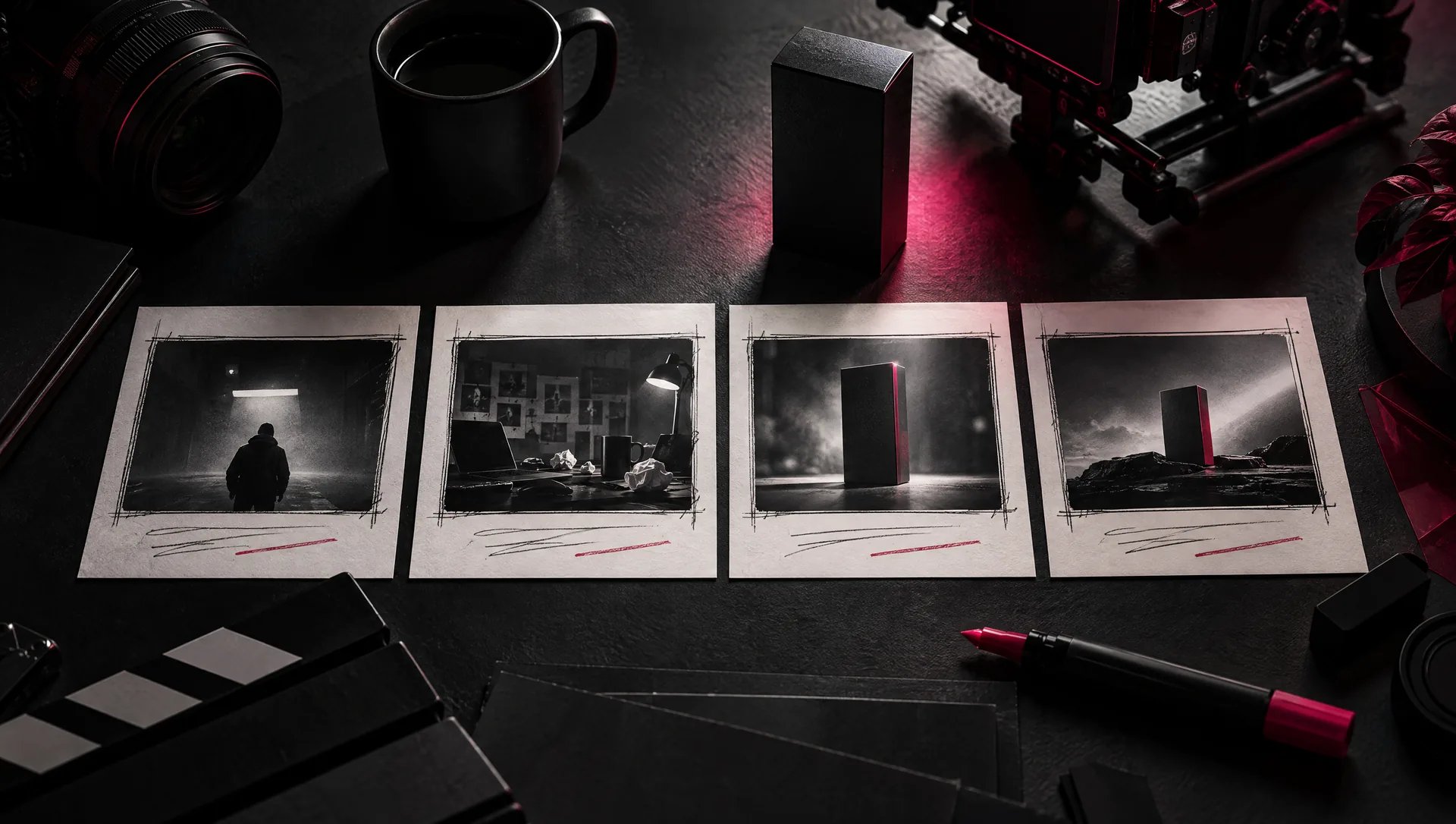
15-second ad script outline
Here’s a simple outline. The timings are guidelines, not rules: fit them to your music and voice-over.
- 0–3 seconds, hook and situation: a line, an image or a gesture that stops the scroll and shows what the ad is about.
- 3–7 seconds, conflict: what’s blocking, what’s missing or what your audience is feeling.
- 7–12 seconds, solution: the product, service or idea in action, with the brand clearly visible.
- 12–15 seconds, payoff and CTA: the line or image that wraps it up, then one clear action, on screen and in the voice-over.
Rule of thumb: at a natural pace, a 15-second voice-over holds roughly 35 to 40 words. Any more and you either cut copy or talk too fast.
30-second ad structure
With 30 seconds, you don’t tell twice as many things. You give the conflict more room and add proof.
- 0–3 seconds, hook: the moment of tension or the intriguing image, with the product or brand already present if possible.
- 3–8 seconds, situation: who the character is, where they are, what they’re trying to do.
- 8–15 seconds, conflict: the obstacle gets worse, an attempt fails, the frustration shows.
- 15–23 seconds, solution: the product enters the scene and you see it work, with one or two benefits at most.
- 23–27 seconds, proof and payoff: a visible result, a reaction, a before/after.
- 27–30 seconds, CTA: logo, any offer, and the action to take.
Plan your cutdowns while you write: a well-built 30-second ad can be recut to 15 seconds, and even to 6 seconds for a YouTube bumper ad. If every sequence works on its own, editing the shorter versions is easy.
Worked example: a 15-second ad for an insulated bottle
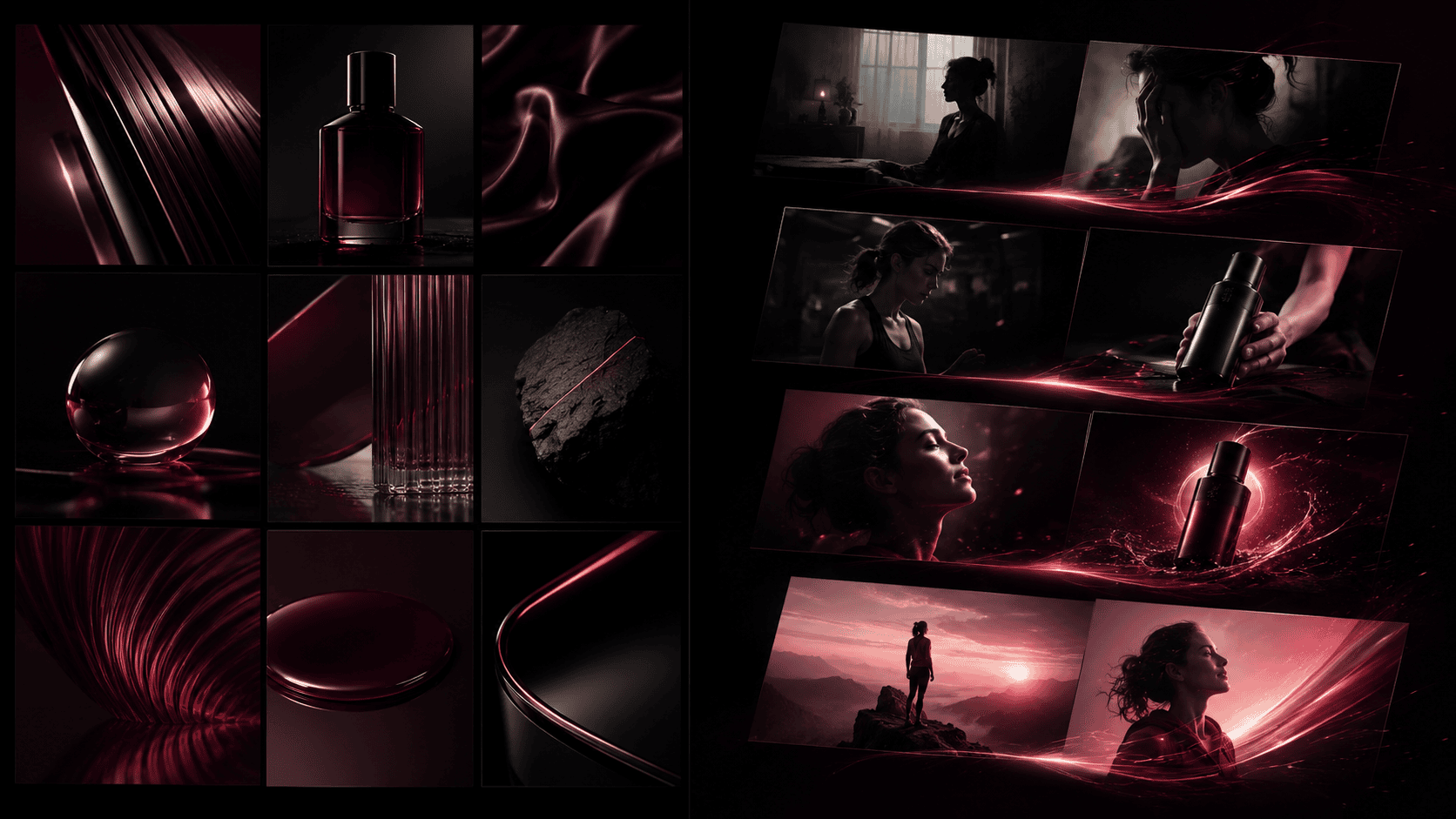
A fictional example with a generic product and no real brand, to show the structure shot by shot.
- Situation (0–3 s): tight shot of a desk, a plastic water bottle next to a laptop. On-screen text: “3 p.m. Your water’s been warm since noon.”
- Conflict (3–7 s): a sip, a grimace, the bottle pushed away. Voice-over: “So you stop drinking for the rest of the day.”
- Solution (7–12 s): same desk, same time. The insulated bottle, logo visible, pours water that’s still cold, ice cubes clinking. Text: “Cold until evening.”
- Payoff and CTA (12–15 s): a real sip, a smile, back to the screen. Final shot: the bottle, the brand name and “Get yours.”
Why it works: the conflict is universal, the product is the visible solution, the benefit is shown rather than claimed, the brand appears during the story rather than only at the end, and on-screen text makes the ad clear with the sound off.
The same structure in other industries
- Coffee: someone starts the day exhausted, an important meeting is coming up, they make their coffee and take back control of the morning.
- Restaurant: someone is looking for a place to eat without wasting time, finds the spot, the dish arrives, the atmosphere is inviting. Payoff: “Your next break starts here.”
- Personal brand: an entrepreneur posts videos that get views but are quickly forgotten, then structures them with a hook, a story and a CTA. Payoff: “Posting more isn’t what changes everything. Telling better stories is.”
Each time, the video doesn’t just show a product: it shows a moment from real life, a decision and a result. If you want an ad written, shot and edited around this logic, take a look at the video ad production service.
Mistakes that sink a short ad
Starting too slowly
Open with an animated logo or three seconds of mood shots, and the viewer is already gone. Open on the action or the conflict.
Showing the product without context
A product on its own can look beautiful, but it becomes convincing once people understand the problem it solves.
Trying to say everything
A short ad doesn’t list every feature. It makes one strong idea and one main benefit stick.
Forgetting emotion
Humor, surprise, desire, frustration, curiosity, relief: emotion gives a video energy and makes it easier to remember.
Saving the brand for the last second
If the brand only shows up on the final shot, many viewers will never see it. Work the product, logo or name into the story itself.
Ending without a real conclusion
Even a short video needs a clear ending: a promise, a strong line or a memorable final image, then a single CTA.
Pre-publish checklist for your ad
- The hook is clear in under 3 seconds, even with the sound off.
- The conflict is obvious: viewers know what problem the ad solves.
- Every shot serves the story; the ones that don’t are cut.
- The brand or product appears early, not just on the last shot.
- One main benefit, shown on screen.
- The video makes sense without sound (captions, on-screen text) and gets better with it.
- Text, logo and CTA stay inside the safe zone for Reels, TikTok and Shorts.
- The format matches the placement: 9:16 for TikTok, Reels and Shorts.
- The CTA is single, simple and consistent with the ad’s button.
- The ending sticks: a payoff, a line or a final image.
- You’ve planned cutdowns (6, 15, 30 seconds) or several hooks to test.
Once the ad is live, compare the variants and look at where viewers drop off. Editing rhythm matters as much as the script: that’s the subject of the article on video retention, rhythm and editing.
For a story longer than a short ad, see the guide to the video sales letter (VSL); to fit the length to each platform, see Reels, TikTok and Shorts video size and length.
Key takeaways
- A short ad needs a story: situation, conflict, solution, then payoff and CTA.
- Conflict is the engine: with no problem to solve, there’s no reason to stay.
- The first 3 seconds set up the topic; by second 6, the hook has to have landed.
- The brand is part of the story, not just the last shot.
- In 30 seconds you don’t add ideas: you develop the conflict and add proof.
- An ad should work without sound and end on one clear action.
FAQ
Can you tell a story in 6 seconds?
Yes, if you reduce the story to two beats: a conflict and its resolution. That’s the format of YouTube bumper ads, which are non-skippable and last up to 6 seconds. There’s no room to set the scene: open directly on the problem, show the product fixing it and end on the logo. One idea, one strong image, one line.
Should a short ad show the brand at the start?
As early as possible, yes, but without breaking the story. Google’s ABCD framework recommends branding early and often, because some viewers will never reach the end. The right way is to work the product, packaging or name into the first scenes, rather than opening on an animated logo that makes people scroll away.
What’s the difference between a hook and storytelling?
The hook is the opening, the first two to six seconds that stop the scroll. Storytelling is the whole structure that gives people a reason to watch to the end: situation, conflict, solution, payoff. The two are linked: the best hook in an ad is often the conflict itself, shown before anything else, which opens a question the rest of the ad answers.
How do you write the CTA for a short video ad?
One action verb, one destination: “Shop now,” “Book,” “Try it free.” Put it on screen, say it in the voice-over if there is one, and check that it matches the ad’s button. The CTA should flow from the story: if the ad has shown the problem and the solution, the action becomes the logical next step.
Go further